
Onetrackk vs. Traditional Employee Advocacy
 Jun 15,2026
  By admin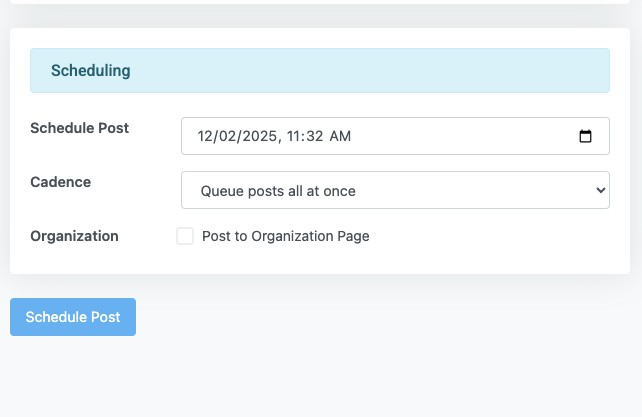
Onetrackk vs. Traditional Employee Advocacy: A Simpler Way to Post on Employees’ LinkedIn Accounts
Employee advocacy on LinkedIn is no longer optional. When your team posts consistently, you get more reach, more credibility, and more pipeline than any single company page can deliver. The challenge is execution: most businesses end up buying “employee advocacy tools” that do little more than push reshare links and generic captions into a content library.
Onetracckk takes a different path. Instead of treating your employees as a reshare channel, it gives you an easy, centralized way to publish content directly to employees’ LinkedIn accounts (with their permission) so they can stay visible and active without doing all the heavy lifting themselves.
If you are tired of low adoption and one‑click reshares that all look the same, this guide explains why a direct‑posting workflow on LinkedIn is simpler, more effective, and better suited for busy teams than legacy employee advocacy tools.
What Traditional LinkedIn Employee Advocacy Tools Actually Do
Most mainstream employee advocacy platforms for LinkedIn follow the same pattern.
-
They create a centralized content library of pre‑approved posts, links, and images.
-
Admins assign these items to groups of employees and notify them via email, Slack, or in‑app alerts.
-
Employees log into the platform, pick a post, and reshare it to LinkedIn with one click, sometimes adding a short personal comment.
This model can work for basic reach, but it has clear limitations.
-
Resharing is not real advocacy
LinkedIn experts point out that real advocacy is when employees share in their own voice, talk about what they actually care about, and build their personal reputation over time. Reposting the same corporate update that 50 colleagues just shared is closer to amplification than authentic advocacy. -
Low adoption over time
Many programs start strong, then participation drops as employees feel like they are just “pushing company content” instead of building their own brand. Logging into a separate platform, selecting posts, and customizing every share is extra friction for busy professionals. -
Limited to “copy‑paste” workflows
Traditional tools assume employees will manually choose what to share, tweak the copy, and hit publish. That’s a big ask for team members who are not natural content creators.
Because of these issues, companies are now looking for simpler LinkedIn‑only solutions focused on execution, not just content libraries.
Why Posting Directly to Employees’ LinkedIn Accounts Is More Powerful
Instead of forcing employees through another portal to reshare content, a LinkedIn‑first approach focuses on what matters most: consistent, high‑quality posting on personal profiles.
A direct‑posting workflow delivers several advantages:
-
Consistency without burnout
When posts can be drafted, scheduled, and published for employees (with clear approvals), you maintain a steady cadence without expecting your team to be content marketers. -
Stronger personal brands
Employees show up in the feed with regular, relevant posts, which grows their authority and network over time. -
Less friction, more participation
People are far more likely to stay in a program if they do not need to log into a second platform and decide what to post every week. -
Better control for marketing and leadership
Marketing and leadership teams can align messaging, campaigns, and timing across multiple employee accounts, while still allowing individual review before anything goes live.
Onetracckk is built specifically around this model for LinkedIn.
How Onetrackk Makes LinkedIn Posting Easier Than Traditional Employee Advocacy Tools
Onetracckk is designed around one simple promise: make it dramatically easier to post on employees’ LinkedIn accounts, without treating them like a generic reshare button. Below are the key differences compared to standard employee advocacy platforms.
1. LinkedIn‑only focus vs. “everywhere and nowhere”
Most advocacy tools spread themselves across multiple networks (Facebook, X, Instagram, LinkedIn) and end up with complex workflows and heavy admin dashboards. Onetracckk focuses exclusively on LinkedIn, so everything—from onboarding to scheduling—is optimized for how real professionals use that platform.
For a business owner or marketing lead, that means:
-
Cleaner interface and fewer settings
-
No need to manage multiple social profiles you do not care about
-
Features tailored to LinkedIn posts, profiles, and audience behaviors
2. Direct posting workflow vs. content library resharing
Traditional tools revolve around a shared content hub and one‑click reshare buttons. Onetracckk flips the model:
-
You define campaigns, topics, and content themes centrally.
-
Onetracckk helps you prepare posts for each participating employee’s LinkedIn account.
-
Employees approve content and set preferences, and posts go out automatically on schedule.
This removes the constant “go pick a post and reshare it” friction that kills adoption in most advocacy tools.
3. Simpler employee experience
Employee advocacy guides stress that programs succeed only when it is easy for employees to participate and clear what they should do. Onetracckk is built with that in mind:
-
Minimal setup steps for each employee
-
Clear, guided review and approval process
-
No need to scroll through a crowded content library
Employees can stay active on LinkedIn while spending almost no time choosing content or writing posts from scratch.
4. Better alignment with LinkedIn best practices
LinkedIn’s own guidance emphasizes consistent, quality posting and personalization—not just resharing company announcements. Onetracckk’s workflow supports this by:
-
Encouraging a regular cadence of posts tied to campaigns
-
Making it easy to include commentary, insights, and stories that feel natural for each role
-
Avoiding the “50 people shared the same link with the same caption” problem that reduces credibility and engagement
SEO Benefits of a Direct‑Posting LinkedIn Advocacy Strategy
For an owner or marketer thinking in terms of search and visibility, an on‑profile posting strategy via Onetracckk has clear SEO implications:
-
More branded search demand
As employees share useful, consistent content on LinkedIn, more people search your company name, products, and key leaders, boosting branded search volume—one of the strongest trust signals in organic search. -
Stronger E‑E‑A‑T signals
Search engines increasingly look at experience, expertise, and authority across the web. Active employee profiles talking about your space help support your perceived authority in that niche. -
Indirect backlinks and mentions
LinkedIn content often leads to podcast invites, guest posts, and media mentions, which turn into backlinks and citations over time.
Traditional reshare‑only advocacy tools deliver impressions. A direct‑posting, LinkedIn‑first approach can support both social visibility and long‑term SEO momentum.
Who Onetrackk Is For
Onetracckk is ideal if:
-
You are a small to mid‑sized business that lives on LinkedIn for sales, recruiting, or deal flow.
-
Your team is too busy to log into yet another tool just to reshare corporate posts.
-
You want consistent, high‑quality posting from multiple employee profiles without micro‑managing everyone’s content.
If you are currently using or considering a traditional employee advocacy platform, ask yourself: do you really need another content library and reshare button, or do you need an easier way to get real posts live on employees’ LinkedIn accounts?
Try Onetrackk Free: See the Difference for Yourself
The best way to understand the difference between Onetracckk and a traditional employee advocacy tool is to experience it. Instead of lengthy demos and complex rollouts, you can start with a small pilot group and see results in a matter of days.
Here is how a typical free trial works:
-
Choose 3 employees whose LinkedIn presence you want to grow.
-
Connect their LinkedIn accounts and define a few simple campaign themes.
-
Approve the first batch of posts, schedule them, and watch how much easier it is to keep everyone active.
Within a few weeks, you will see whether a LinkedIn‑only, direct‑posting workflow fits your culture better than reshare‑based advocacy.
Get started today with a free trial of Onetracckk and turn LinkedIn from a reshare chore into a simple, consistent engine for visibility, leads, and hiring.
Click here


 Jun 15, 2026

